Long before Photoshop, beauty filters, and digital editing, Hollywood had already perfected the art of creating an unforgettable image.
The glamorous portraits of Hollywood’s Golden Age may look effortlessly flawless, but there was an enormous amount of artistry happening both in front of and behind the camera. Hair, makeup, wardrobe, carefully sculpted lighting, expert posing, darkroom techniques, and yes, photo retouching all played a part in creating the movie-star image. The tools may have been very different, but the desire to create a beautiful finished portrait is nothing new.
The Illusion of Hollywood Perfection
During Hollywood’s Golden Age, movie studios weren’t simply producing films. They were also carefully crafting the public images of their stars. Studio portraits appeared in magazines, newspapers, advertisements, theater displays, and promotional materials across the country. For audiences, these photographs offered a glimpse into the seemingly glamorous world of Hollywood. Everything about them was intentional.
A photographer could use lighting to sculpt cheekbones, deepen shadows, emphasize eyes, and create the luminous skin that became synonymous with classic Hollywood glamour. Makeup artists, hairstylists, costume designers, and photographers worked together to create a look before the shutter was ever pressed. But the work didn’t necessarily end when the photograph was taken.
Retouching Before Photoshop
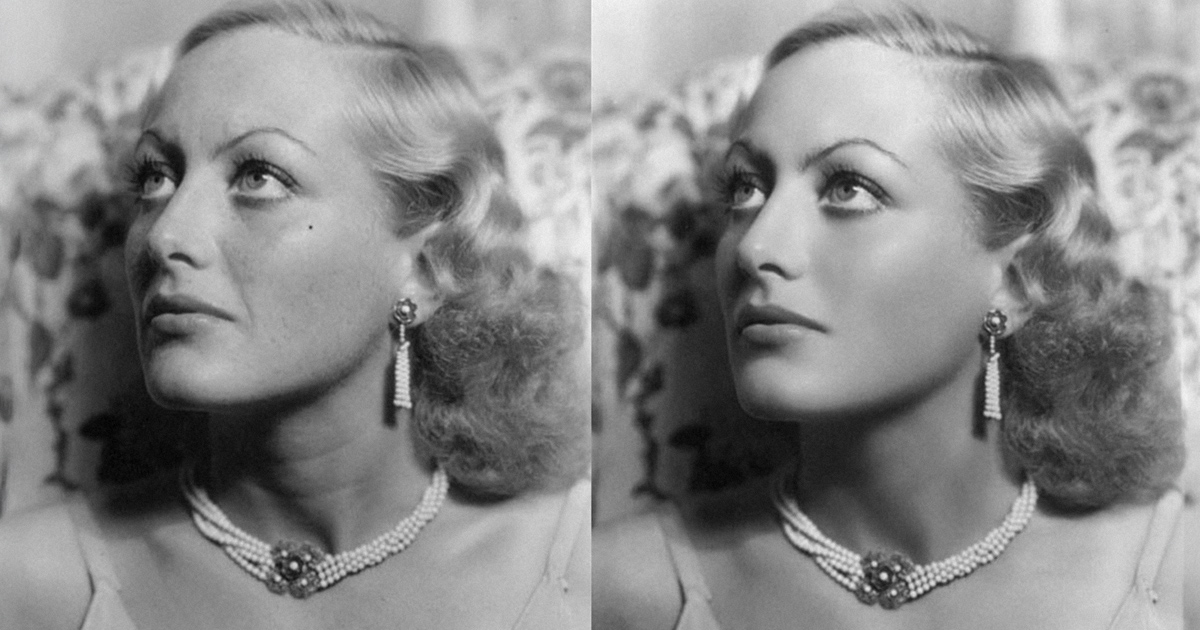
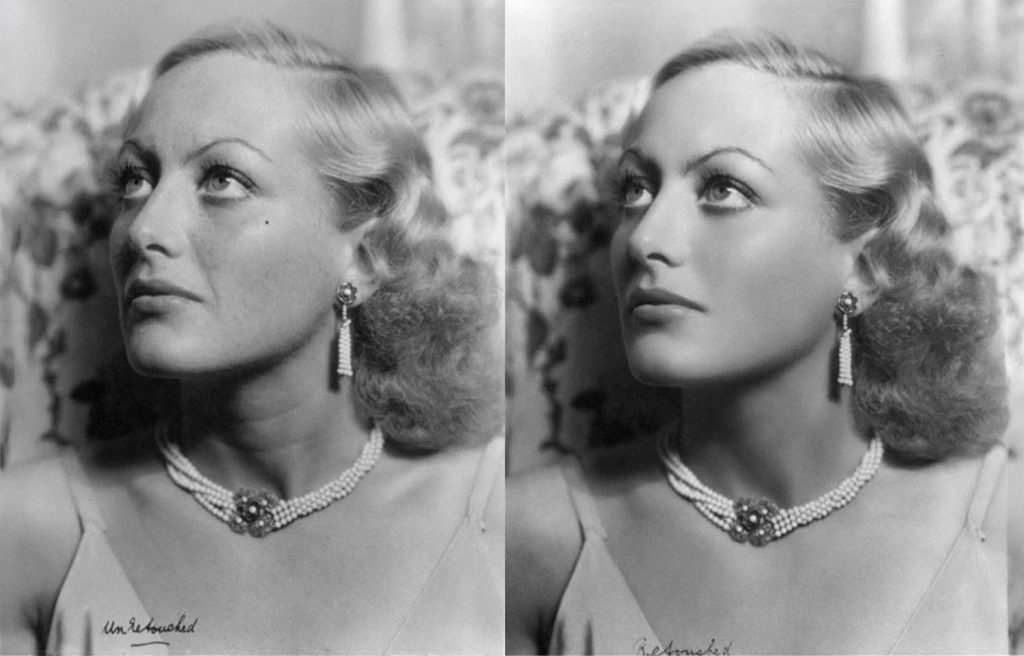
Photo manipulation didn’t begin with the digital age. Photographers had been altering photographs and negatives since the nineteenth century, long before Hollywood existed. By the Golden Age of Hollywood, skilled retouchers could refine photographs by working directly on negatives and prints. Techniques varied depending on the photographic process and the effect desired, but could include pencils, brushes, dyes, paints, etching, and airbrushing.
The airbrush itself had become an important tool in commercial art and photography. It could be used on photographic prints and negatives to modify or enhance areas of an image. There were no layers, no healing brush, no instant before-and-after preview, and most importantly, there was no undo button.
Every adjustment required a steady hand and a deep understanding of light, shadow, texture, and the photographic process. Retouching wasn’t simply correcting an image. In the hands of a skilled artist, it became part of creating one.
Creating the Hollywood Face
Much like modern portrait retouching, the goal wasn’t necessarily to make someone completely unrecognizable. It was to polish the image that had already been carefully created through styling, lighting, and posing.
Skin could be softened and imperfections minimized. Highlights and shadows could be refined. Hair could be tidied, distracting details reduced, and certain facial features subtly emphasized. Even negatives themselves could be altered. Retouching could be used to mask unwanted details or rework small areas before the final photograph was printed.
The result was the kind of seemingly effortless perfection that became synonymous with Hollywood. Of course, it wasn’t effortless at all.
George Hurrell and the Art of Glamour
Few photographers shaped our idea of Old Hollywood glamour more than George Hurrell. During the 1930s and early 1940s, Hurrell became one of Hollywood’s most celebrated portrait photographers, eventually serving as the in-house portraitist for MGM. His dramatic use of light, shadow, posing, and retouching helped create definitive portraits of some of the era’s biggest stars.
His subjects included Joan Crawford, Jean Harlow, Clark Gable, Greta Garbo, Marlene Dietrich, Myrna Loy, and many others whose faces helped define Hollywood’s Golden Age. Hurrell wasn’t simply documenting what these stars looked like. He was creating an image of who they were supposed to be.
A glamorous movie star didn’t just need to look beautiful. She might need to appear mysterious, sophisticated, seductive, powerful, innocent, or impossibly elegant. Lighting, expression, body language, wardrobe, and retouching all contributed to telling that story.
The Smithsonian’s National Portrait Gallery has described Hurrell’s style as idealized portraiture created through artful posing, innovative lighting, and skillful retouching. His photographs didn’t merely record Hollywood stars. They helped shape the very standards of glamour audiences came to associate with them.
The Hollywood Star Machine
This is one of the things that makes Golden Age glamour so fascinating. The movie stars we remember weren’t simply discovered looking exactly as they appear in their most iconic photographs. Their public images were carefully constructed.
Studios understood the power of photography. A single portrait could help transform a young actor into a sophisticated leading lady, a dangerous femme fatale, or America’s newest sweetheart.
Everything mattered, from the arch of an eyebrow to the fall of a gown. Portrait photographers didn’t simply photograph celebrities. They helped create them.
That doesn’t make the glamour somehow less real. If anything, understanding how much artistry went into these photographs makes them even more impressive. They were collaborations between talented people, all working toward a single goal: creating an image that audiences would never forget.
Was Old Hollywood Glamour Real?
Yes and no. The women photographed during Hollywood’s Golden Age were real, but the finished portraits were carefully crafted interpretations of them.
The perfect lighting was intentional. The pose was intentional. The hair and makeup were intentional. The wardrobe was intentional. The final retouching was intentional. And perhaps that’s the most interesting lesson hidden inside these photographs.
We sometimes look at images of Old Hollywood stars and compare ourselves to them as though the camera simply happened to capture impossibly perfect women looking impossibly perfect. It didn’t.
Those portraits were created by teams of artists who understood exactly how to use styling, lighting, posing, photography, and retouching to show their subjects at their most glamorous.
Hollywood knew something nearly a century ago that remains true today: a beautiful portrait isn’t simply found. It’s created.
From the Darkroom to the Digital Age
Photography has changed dramatically since the Golden Age of Hollywood. Film has largely given way to digital cameras, and painstaking work once performed by hand can now be accomplished with sophisticated editing software. But the purpose of thoughtful portrait retouching hasn’t changed nearly as much.
At Lone Star Pin-up, retouching is the finishing touch rather than the beginning of the transformation. Hair and makeup, wardrobe, lighting, expression, and guided posing do the heavy lifting first. Retouching then allows us to polish the final portrait while keeping the person in it recognizable as herself.
The goal isn’t perfection, and it isn’t to erase every line or characteristic that makes someone unique. It’s to create a finished portrait that feels polished, intentional, and worthy of the vintage glamour that inspired it.
In that sense, today’s portrait artists are carrying forward a tradition that began long before digital photography. The tools have changed, but the artistry hasn’t.