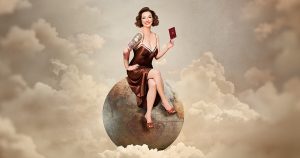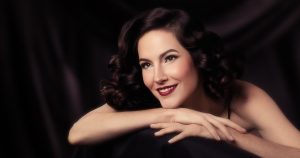
The other day I was Googling Lone Star Pin-up, as one does, when I stumbled across something interesting: a website I’d never seen before promising to “turn yourself into a Lone Star Pin-up girl.” Well. That name sounds familiar. Obviously, I clicked.
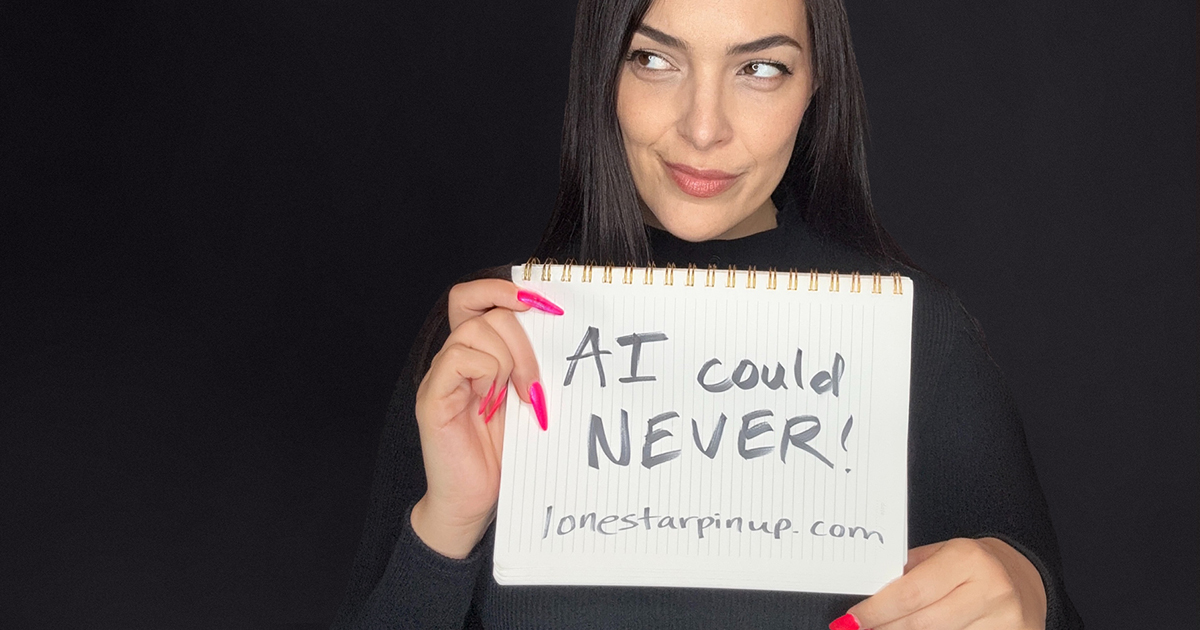
What I found was an AI image service offering to transform an uploaded photograph into its interpretation of a pin-up girl for around $70. The examples were…interesting. They were technically pin-ups, although the resemblance between the original person and her AI alter ego seemed questionable at best. But what really caught my attention was an entire page devoted specifically to creating a “Lone Star Pin-up,” complete with Texas-inspired pin-up imagery and suggestions for creating your own. I’m certainly flattered. But AI could never.
Sure, AI Can Make a Pin-up Picture
Let’s give our robot overlords some credit. AI can generate an image with curled hair, red lipstick, a retro outfit, and plenty of other visual ingredients it has learned belong in something called “pin-up.” Sometimes the results are even pretty. But creating a picture of someone who looks vaguely like you dressed as a pin-up and actually becoming the woman in one are two very different things.
A Lone Star Pin-up session starts long before I ever pick up the camera. You get to play dress-up in a studio filled with vintage wardrobe, lingerie, shoes, jewelry, and accessories while we figure out what version of fabulous we’re creating that day. Maybe that’s a 1940s bombshell, a glamorous Hollywood starlet, a cheeky cheesecake pin-up, something dark and dramatic, or an idea that doesn’t fit neatly into any category at all.
Then you get to sit back while a professional hair and makeup brings the idea together before we add the wardrobe and accessories and get you in front of the camera. From there, you’re guided through every pose and expression, even if you walked in absolutely convinced you had no idea what to do in front of a camera. There will probably be some laughing. There may be a pose you’re certain feels ridiculous right up until you see the photograph. You might discover that something you never would have picked from the wardrobe looks incredible on you. That’s all part of it! AI doesn’t get any of that.
The Experience Is Part of the Picture
I think this is the part that gets lost when photography is reduced to the final image. Of course the photographs matter. We want you to leave with portraits you absolutely love, but there’s an entire experience attached to those photographs that becomes part of the memory. It’s seeing yourself after your hair and makeup are finished, trying something completely outside your normal style, playing with an idea you’ve had in your head for years, and discovering that no, you didn’t need to know how to pose after all. It’s seeing your photographs on the screen and recognizing yourself in them, even if it’s a version of yourself you don’t get to see every day.
There’s also something wonderfully different about creating an image with another person. We can change an outfit because something else looks better on you, abandon an idea that isn’t working, get completely carried away with one that is, or suddenly decide that what this photograph really needs is a giant martini glass. The session can evolve because we’re responding to the actual person standing in front of the camera. And perhaps most importantly, the person in the finished photographs is actually you. Not an algorithm’s approximation of you based on a photograph you uploaded.
AI Isn’t Really the Villain Here
I’m not particularly interested in declaring war on AI. Technology changes, creative tools change, and people are going to have fun with them. If uploading a selfie and seeing yourself transformed into an imaginary pin-up makes you smile, have at it. But that’s a very different thing from what happens at Lone Star Pin-up.
We aren’t trying to generate a fantasy version of what you might look like as a pin-up girl. We’re styling, posing, lighting, and photographing the person who actually walked through our door. That’s part of what I love about this kind of photography. You don’t need an algorithm to give you a different face, different body, or entirely different version of yourself before you qualify for the fantasy. We work with the real thing and create the fabulousness from there.
So, Can AI Make You a Pin-up?
It can make you a pin-up picture. I’ll give it that. But Lone Star Pin-up isn’t a filter or a prompt. It’s playing dress-up in a closet full of vintage fabulousness, getting professional hair and makeup, collaborating on an idea, and laughing through poses you were absolutely convinced you couldn’t do. It’s creating something around your face, your body, your personality, and your style, then getting to see the results while you’re still here.
You don’t upload a photograph and ask us to imagine you as a pin-up. You get to become one. And I’m afraid AI could never…